


Keep Your Home Cooler, Save on Energy Bills
When your attic and garage aren’t properly insulated, your wallet pays the price. Heat builds up fast, cool air escapes easily, and your air conditioning system runs longer than it should. The Solar Guys offer home insulation upgrades for a more comfortable, energy efficient home. We offer Radiant Barrier Insulation, perfect for attics and garage doors and blown-in insulation designed for the unique demands of Florida’s climate. Every install is done by licensed professionals and backed by our 20+ year track record across Ocala, The Villages, Leesburg, and the surrounding area.
Your roof and attic are subjected to Florida’s relentless sun all year long. Without proper insulation, trapped attic heat radiates down into your living areas, making them harder to cool and unevenly air-conditioned. We offer two high-performance attic insulation solutions that will make your home more comfortable and lower your energy bills: radiant barriers to reflect heat away from your attic, and blown-in insulation to prevent cool air leaving your living spaces.
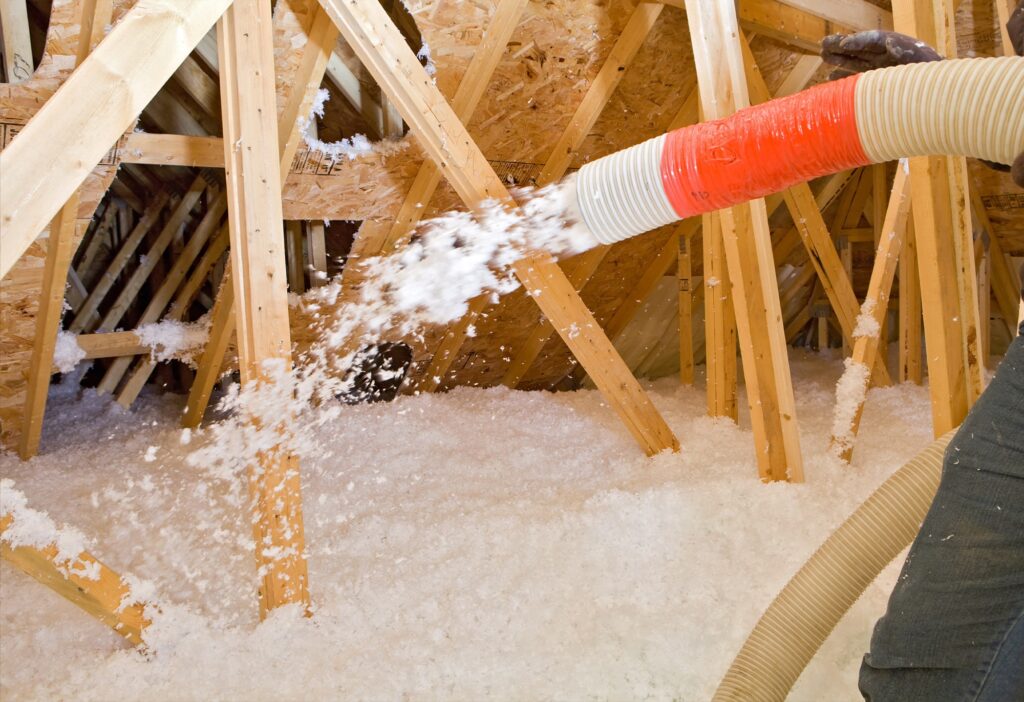
Our loose-fill fiberglass insulation seals gaps, slows heat transfer, and helps balance the temperature inside your home. The result is a quieter, more comfortable space with less strain on your air conditioner, and lower energy bills.
Our Super R Plus double bubble radiant barrier insulation is installed on the underside of your roof deck to reflect up to 95% of radiant heat away from your home, reducing heat gain from your roof.
For even more protection, ask us about adding a solar-powered attic fan. It quietly pulls trapped heat and moisture out of the attic, extending the life of your insulation and reducing your cooling load.
Garages are the hottest space in any Florida home thanks to metal garage doors that absorb direct sun, and uninsulated attic spaces. Whether you use your garage as a workspace, storage area, or entry point into the home, it deserves the same level of protection as the rest of the house.
Our lightweight, low-profile, garage door insulation reflects the sun’s rays away from your home while reducing outside noise and giving your door a clean, finished look from the inside.
Garage attic spaces are one of the most overlooked areas in a home. Sealing that space with proper insulation makes a huge difference in comfort.
Want fresh air, too? Our powerful and whisper-quiet garage fans improve airflow, reduce humidity, and help prevent heat buildup before it starts.
Looking to make the biggest impact on your home’s comfort and efficiency? Most of our customers choose to insulate their entire home- including all areas of their attic and the space above their garage. It’s common for areas that aren’t air conditioned to be under-insulated, leading to hot spots, uneven temperatures, higher energy bills, and added strain on your air conditioning system as it works harder to maintain comfort throughout the home.
Our comprehensive approach creates a fully sealed envelope that fights heat on every front. We call it the Ultimate Energy Saver Package, and it includes:
Radiant barrier cost depends on attic size, installation method (roof rafters vs. attic floor), and how difficult the attic is to access. Pricing can also change if the job includes air sealing, ventilation improvements, or removing old materials. The most accurate number comes from an in-person quote because attic layouts vary a lot from house to house.
It usually helps most when your attic is under-insulated and leaky, because the attic is a major pathway for heat gain/loss. Better insulation can reduce temperature swings, improve HVAC runtime, and make upstairs rooms feel less extreme in summer and winter. Pairing insulation with air sealing is typically where homeowners notice the biggest comfort jump.
This is really a moisture-control question, and the answer depends on your climate and what layers already exist. In many attic upgrades, installers use unfaced material so you don’t accidentally create a “double vapor barrier” that can trap moisture. When in doubt, it’s worth having a pro verify what’s already in your ceiling assembly before adding more.
Common signs include hot/cold rooms, noticeable drafts, big temperature swings between floors, and higher-than-expected heating/cooling costs. In the attic, if insulation looks thin, patchy, or compressed, performance drops. A quick inspection (or an energy audit) can confirm whether you need a top-off, air sealing, or both.
Cost depends on your attic size, access, current insulation, and whether air sealing or removal is needed. Many homeowners see installed pricing quoted by the square foot, and totals can vary widely by region and material choice. A contractor quote is the fastest way to get a real number because details like attic height, ductwork, and hatch sealing matter.
It can work well in the right setup, especially in hot, sunny climates where attics overheat and AC runs hard. The U.S. Department of Energy notes radiant barriers are primarily used to reduce summer heat gain and cooling costs (results vary by home and climate). Think of it as a “heat mirror” for your attic rather than a replacement for insulation.
Radiant barrier insulation is usually “worth it” when your attic gets extremely hot, your ductwork is in the attic, and you’re trying to lower cooling load in warm climates. In cooler regions, it may deliver smaller benefits, so the payback depends on your energy costs and attic layout. A quick rule of thumb: if your top problem is summer heat gain, it’s often a smart add-on; if your problem is winter heat loss, air sealing + attic R-value typically come first.
It can contribute to moisture issues if installed incorrectly or if the attic already has humidity/ventilation problems. Some sources note condensation risk in certain conditions (especially when temperature differences are extreme), and dust/moisture can reduce performance. The best protection is: good attic ventilation, correct placement (with air space), and choosing the right material type for your climate.
You can, but it has to be done carefully so you don’t crush the insulation (which reduces its effectiveness) and so moisture risk is considered in your climate. Over-the-insulation installs can also be tricky if you have storage decking, lots of wiring, or HVAC equipment in the way. Many homeowners choose a rafter/roof-deck installation to avoid contact with insulation and keep the reflective surface cleaner.
Usually, no. Radiant barriers generally aren’t rated like mass insulation (fiberglass, cellulose, etc.) because they don’t work primarily by resisting conductive heat flow. Instead, performance relates to reflectivity/emissivity and proper installation next to an air space. That’s why it’s commonly used with attic insulation, not instead of it.
Yes. Radiant barriers need to face an air space to reflect radiant heat effectively. If the reflective surface is pressed tight against another material, you lose much of the radiant benefit because heat transfers by conduction instead. That “air gap requirement” is one of the biggest reasons professional installation details matter.
The “best” radiant barrier is the one that’s installed correctly for your attic, meaning it faces an air gap, stays as clean as possible, and doesn’t interfere with ventilation. Many homeowners prefer radiant barrier installed under the roof deck/rafters because performance tends to hold up better over time. A quality installer will help match the product and placement to your climate, attic design, and comfort goals.
At The Solar Guys, our garage door insulation service is a comfort-focused upgrade built around sealing first, then insulating, then verifying the door still operates safely. We start with a quick inspection to identify air leaks, worn or damaged seals, and any door operation issues because weatherstripping and air sealing are a big part of improving comfort and efficiency, especially in attached garages.
Next, we repair or replace as needed the side and top weatherstripping and the bottom seal, then install a garage door insulation system that fits each door section cleanly for even coverage without interfering with hinges, rollers, or track clearance. After insulation is installed, we perform an operational and safety check. Insulation may add weight, which can affect door balance and put extra strain on components if the door is not properly tuned.
If balance correction is needed, we handle it the safe way. High-tension spring work can be hazardous, so we do not treat spring adjustments like a casual add-on. We either address it with the appropriate qualified help or recommend the proper next step so the door remains safe and reliable.
Most attics perform best with a combination of air sealing first (closing leaks around penetrations and the attic hatch) and then adding enough insulation to hit an appropriate R-value for your climate zone. Blown-in insulation is common because it covers evenly and tops off older insulation well. The “right” recommendation depends on whether you’re insulating the attic floor (typical) or the roofline (less common), plus ventilation and moisture conditions.
Not always. If the existing insulation is dry, clean, and not moldy or contaminated, many homeowners simply “top off” with blown-in insulation to reach the right depth. If there’s rodent damage, moisture issues, or you’re doing major air sealing and repairs, removal can make sense.
Often, yes, especially if the batts are in decent shape and not blocking airflow. The bigger goal is an even, continuous blanket with good air sealing below it, so you don’t end up insulating “around” big leaks. When in doubt, an insulation pro can spot compression, gaps, or mis-installed batts that should be fixed first.
Some materials can settle over time if they’re not installed to the right depth/density, which is why proper installation (and hitting the marked depth) matters. Moisture problems usually come from roof leaks, bathroom fan venting issues, or poor attic ventilation, so you want those fixed before insulating. Blown-in insulation isn’t a “mold maker,” but it can hide problems if the attic isn’t dry and well-vented.
Blown-in insulation is one of those projects that looks simple, but the results and safety depend on getting a lot of details right, including air sealing first, proper depth and coverage, and keeping ventilation paths clear. DIY can also get risky fast in attics because of heat, low clearance, exposed wiring, and the chance of stepping through the ceiling. A professional crew can handle baffles, recessed light clearances, hatch sealing, and tricky areas so you do not end up with uneven coverage or hidden problems. For most homeowners, hiring a pro is the safer, cleaner way to get the performance you are paying for.
The right R-value depends on your climate zone and what’s already in your attic. A good installer will confirm your target R-value and then blow to the depth needed to hit it evenly, without blocking soffit vents or burying critical attic ventilation paths. (This is also why air sealing first can be such a big deal.)
Cellulose is typically made from recycled paper treated for fire resistance, while fiberglass is made from spun glass fibers. Both can perform well when installed to the right depth and density, but the “best” choice usually comes down to your goals (budget, sound control, air-leak reduction) and the specific area being insulated.
If you have hot/cold rooms, drafty ceilings, or high heating and cooling bills, blown-in insulation is often one of the best “comfort per dollar” upgrades, especially in an under-insulated attic. It helps create a more continuous thermal blanket, which can reduce HVAC run time and improve indoor comfort.
Blown-in insulation (also called loose-fill) is fiberglass or cellulose that’s installed with a blower to create an even, continuous blanket, most commonly across an attic floor. Homeowners like it because it fills gaps and irregular areas better than many older batt installs. It’s a popular upgrade when rooms feel uneven, the home is drafty, or energy bills are rising.
Yes. Radiant barrier and blown-in insulation do different jobs. A radiant barrier helps reflect radiant heat (mainly summer attic heat), while traditional insulation (like blown-in fiberglass/cellulose) slows conductive heat flow year-round. Most homes get the best comfort and efficiency when radiant barrier is paired with proper attic insulation and air sealing.
For hot climates, the best garage door insulation is radiant barrier insulation. This type of insulation reflects the hot air back outside, keeping it cooler inside the garage. It also helps to reduce noise and keep energy costs down. Additionally, radiant barrier insulation is easy to install and comes in a variety of sizes and thicknesses.